HNLMS Abraham Crijnssen - A Ship That Was Disguised As An Island During WW2
HNLMS Abraham Crijnssen ship is a Jan van Amstel-class minesweeper of the Royal Netherlands Navy (RNN).
Author:Dr. Felix ChaosphereReviewer:Xander OddityMay 21, 2022
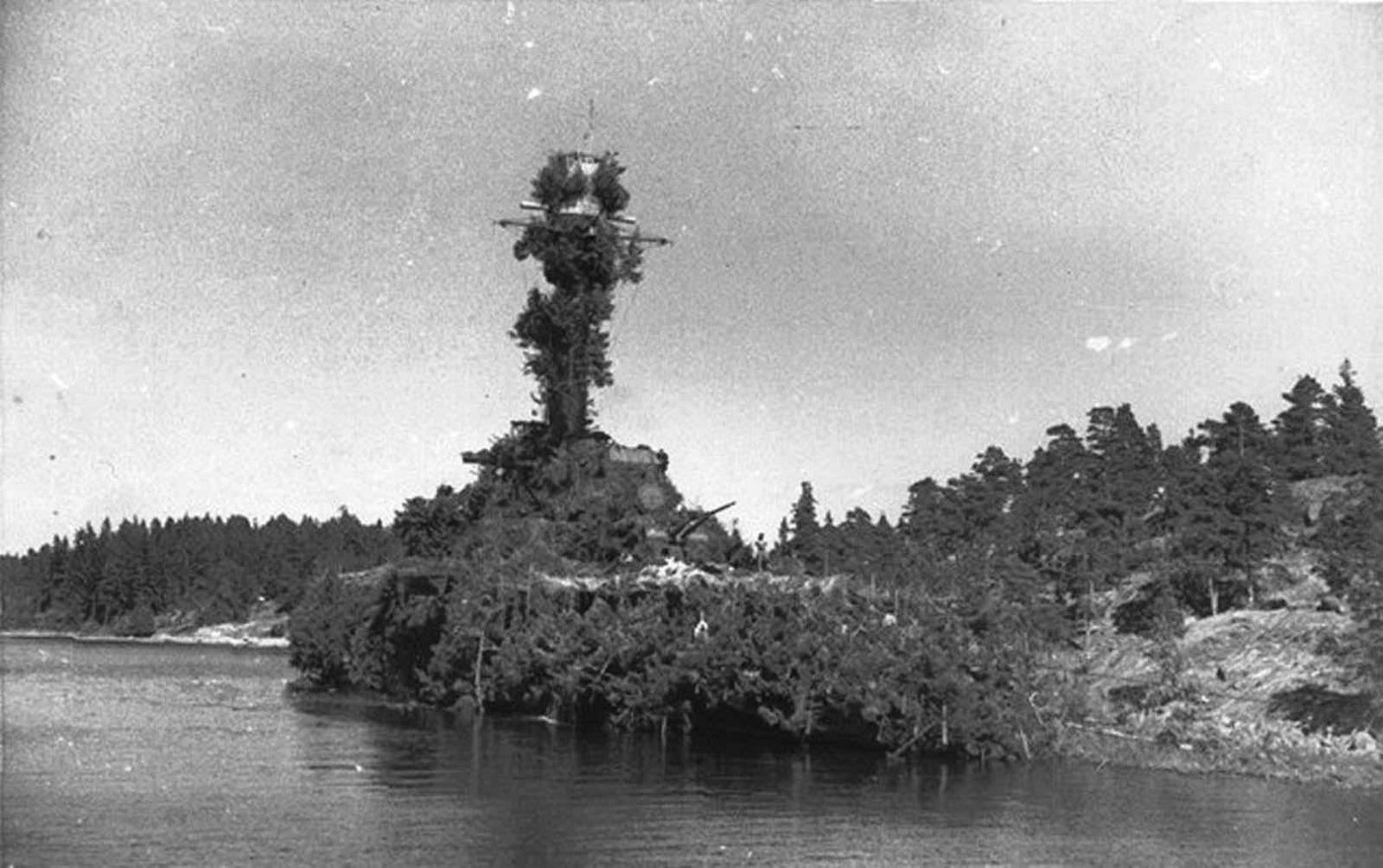
HNLMS Abraham Crijnssen- HNLMS Abraham Crijnssen ship is a Jan van Amstel-class minesweeper of the Royal Netherlands Navy (RNN).
Worked during the 1930s, it was situated in the Netherlands East Indies when Japan went after toward the finish of 1941. Requested to withdraw to Australia, the boat was veiled as a tropical island to keep away from discovery and was the last Dutch boat to escape from the area.
On showing up in Australia in 1942, it was dispatched into the Royal Australian Navy (RAN) as HMAS Abraham Crijnssen and worked as an enemy submarine escort.

Despite the fact that got back to RNN control in 1943, the HNLMS Abraham Crijnssen camouflage boat stayed in Australian waters for the majority of World WarII.
After the conflict, Abraham Crijnssen worked on the enemy of upset watches in the East Indies, prior to getting back to the Netherlands and being changed over into a boom defense ship in 1956.
Taken out of administration in 1960, the vessel was given to the Netherlands Sea Cadet Corps for preparation.
In 1995, Abraham Crijnssen was gained by the Dutch Navy Museum for safeguarding as a historical center boat.
Plan And Development
HNLMS Abraham Crijnssen island camouflage boat was the third of eight Jan van Amstel-class minesweepers developed for the RNN during the late 1930s.
Built by Werf Gusto at their yard in Schiedam, South Holland, the minesweeper was sent off on 22 September 1936 and dispatched into the RNN on 26 May 1937.
It was named after seventeenth-century maritime leader Abraham Crijnssen.
Abraham Crijnssen and her sister ships were 184 feet (56 m) long, with a light emission feet (7.6 m), a draft of 7 feet (2.1 m), and a relocation of 525 tons.
The minesweepers were fitted with two Yarrow 3-drum boilers and two Stork triple extension motors, which gave 1,690 hp (1,260 kW) to two propeller shafts, permitting the boat to arrive at 15 bunches (28 km/h; 17 mph).
Abraham Crijnssen was equipped with asolitary 3-inch firearm, and two Oerlikon 20 mm cannons, in addition to a payload of profundity charges.
The standard boat's organization was 45.

Early Service
The boat was based at Surabaya in the Netherlands East Indies when Japan attacked in 1941.
Following the Allied losses at the Battles of the Java Sea and Sunda Strait in late February 1942, all Allied boats were requested to pull out to Australia.
Abraham Crijnssen intended to cruise with three different warships, however, ended up continuing alone.
To get away from the location by Japanese airplane (which the minesweeper didn't have a weapon to safeguard actually against), the boat was vigorously disguised with wilderness foliage, giving the impression of a little island.
Personnel cut down trees and branches from neighboring islands and organized the cuttings to frame a wilderness overhang covering as a large part of the boat as possible.
Any structure actually presented was painted to look like rocks and cliffs.
In addition to the deception, the boat would stay near shore, secured and stationary during sunlight, and just sail at night.
She set out toward Fremantle, Western Australia, where she showed up on 20 March 1942; Abraham Crijnssen was the last vessel to effectively get away from Java, and the main boat of her group in the area to get by.

RAN Service
In the wake of showing up in Australian waters, the minesweeper went through a refit, which incorporated the establishment of new ASDIC equipment.
On 28 September, the minesweeper was authorized into the RAN as HMAS Abraham Crijnssen.
She was renamed as an enemy of submarine caravan escort and was likewise utilized as a submarine delicate for the Dutch submarines that moved to Australia following the Japanese conquest.
The boat's Dutch mariners were enhanced with survivors from the British destroyer HMS Jupiter and Australian faculty, all under the order of an Australian lieutenant.
The wardroom custom of draping a representation of the charged boat's authoritative ruler prompted some pressure before it was chosen to leave Queen Wilhelmina of the Netherlands on the bulkhead as opposed to supplanting her with King George VI of the United Kingdom, which was introduced in the lieutenant's cabin.
While accompanying an escort to Sydney through the Bass Strait on 26 January 1943, Abraham Crijnssen recognized a submarine on ASDIC.
The caravan was requested to dissipate, while Abraham Crijnssen and HMAS Bundaberg profundity charged the submarine contact.
No destruction of the thought submarine was found.
A couple of quickly delivered profundity charges toward the beginning of the commitment harmed the minesweeper; a few fittings and lines were harmed, and every last bit of her centreline bolts must be supplanted during seven days in length dry-docking.

The Ship that escaped capture disguised as a tropical island
People Also Ask
Was The Minesweeper HNLMS Abraham Crijnssen Disguised As To Avoid Detection During WW2?
Worked during the 1930s, she was situated in the Netherlands East Indies when Japan went after toward the finish of 1941. Requested to withdraw to Australia, the boat was veiled as a tropical island to stay away from recognition and was the last Dutch boat to escape from the district.
What Does HNLMS Stand For?
In English, the Dutch prefix is deciphered as "HNLMS" for, "His/Her Netherland Majesty's Ship".
How Many Minesweepers Does The Navy Have?
There stay 11 MCMs in current support of the armada. These boats use sonar and video frameworks, link cutters, and a mine exploding gadget that can be delivered and exploded by a controller. They are likewise fit for regular clearing measures. The boats are of fiberglass sheathed, wooden structure development.
HNLMS Abraham Crijnssen today is preserved at the Dutch Navy Museum at Den Helder.
Conclusion
The HNLMS Abraham Crijnssen ship was eliminated from the Navy List in 1960. After leaving the administration, Abraham Crijnssen was given to the Sea Cadet Corps (Zeekadetkorps Nederland) for preparing purposes. She was moored at The Hague from 1962 to 1972, after which she was moved to Rotterdam. The boat was additionally utilized as a stockpiling mass during this time.
Dr. Felix Chaosphere
Author
Dr. Felix Chaosphere, a renowned and eccentric psychiatrist, is a master of unraveling the complexities of the human mind. With his wild and untamed hair, he embodies the essence of a brilliant but unconventional thinker. As a sexologist, he fearlessly delves into the depths of human desire and intimacy, unearthing hidden truths and challenging societal norms.
Beyond his professional expertise, Dr. Chaosphere is also a celebrated author, renowned for his provocative and thought-provoking literary works. His written words mirror the enigmatic nature of his persona, inviting readers to explore the labyrinthine corridors of the human psyche.
With his indomitable spirit and insatiable curiosity, Dr. Chaosphere continues to push boundaries, challenging society's preconceived notions and inspiring others to embrace their own inner tumult.

Xander Oddity
Reviewer
Xander Oddity, an eccentric and intrepid news reporter, is a master of unearthing the strange and bizarre. With an insatiable curiosity for the unconventional, Xander ventures into the depths of the unknown, fearlessly pursuing stories that defy conventional explanation. Armed with a vast reservoir of knowledge and experience in the realm of conspiracies, Xander is a seasoned investigator of the extraordinary.
Throughout his illustrious career, Xander has built a reputation for delving into the shadows of secrecy and unraveling the enigmatic. With an unyielding determination and an unwavering belief in the power of the bizarre, Xander strives to shed light on the unexplained and challenge the boundaries of conventional wisdom. In his pursuit of the truth, Xander continues to inspire others to question the world around them and embrace the unexpected.
Latest Articles
Popular Articles